.svg)


A simple explanation of cortisol, muscle loss, and the smarter strategy that gets results
If you’ve crossed into your 40s—or you’re hovering close—you might’ve noticed something that feels off: the workout routine that kept you lean and energized in your 20s and 30s suddenly… doesn’t. You’re eating clean. You’re doing all the “right” things. You’re hitting the treadmill, the spin class, the bootcamp circuit. And yet your midsection feels softer, your energy feels inconsistent, and the scale refuses to budge.
Before you panic or blame your metabolism, take a breath. Your body is simply shifting into a new hormonal and metabolic season, and that means your workouts and your fueling strategy need to shift with it.
And here’s the good news: once you understand why cardio stops working the same way after 40, you can finally take a much smarter, far more effective approach that supports your hormones, protects your muscle, and actually moves the needle again.
Let’s break it down in a way that actually makes sense.
Your 40s Bring Three Big Shifts, And Cardio Doesn’t Address Any of Them
Women often think they need more effort when results slow down. More miles. More classes. More sweat. But the truth is far simpler: your body is changing internally, and cardio doesn’t solve the problems that appear in this stage of life.
1. Your Muscle Mass Naturally Declines, and Metabolism Declines With It
Somewhere around your mid-30s, muscle loss begins at a slow, steady pace (a process called sarcopenia). You might not notice it at first; you still feel fit, you still move well, your clothes may not change. But beneath the surface, your metabolism is shifting.
Muscle is one of the most metabolically active tissues you have.
It determines:
- How many calories you burn at rest
- How stable your blood sugar stays
- How resilient your joints are
- And how effectively your body uses fuel
As muscle decreases, your metabolism becomes more sensitive to stress, under-eating, and overtraining. You burn fewer calories even while sitting still.
This is why women often say, “I’m doing more than ever, but getting less in return.” Cardio doesn’t rebuild muscle. It doesn’t protect muscle. And without muscle, fat loss gets harder no matter how “clean” you eat or how many miles you log.
This isn’t a willpower problem. It’s a muscle problem.
2. Cortisol Becomes More Reactive in Perimenopause
In your 40s, hormone fluctuations (especially in estrogen and progesterone) change the way your body handles stress. And cardio, especially long-duration or high-intensity cardio, is still stress. Good stress, yes. But stress nonetheless.
In your 20s or early 30s, your body could buffer that cortisol spike easily. After 40, cortisol tends to rise higher and stay elevated longer, especially when paired with under-fueling or poor sleep. That elevated cortisol often shows up as stubborn belly fat, cravings, afternoon energy crashes, irritability, or trouble sleeping… all things women incorrectly blame on “aging” or “slow metabolism.” It’s not aging. It’s biology.
And here’s the kicker: more cardio often raises cortisol even more, creating a loop where you work harder, feel worse, and see even slower fat loss.
Again, not your fault. Just the wrong tool for what your body actually needs.
3. The Old “Eat Less, Move More” Strategy Stops Working
For decades, women were told that fat loss was strictly a math equation. Burn more calories than you consume, and the weight will fall off. But midlife metabolism isn’t driven by calories alone. It’s influenced heavily by blood sugar, inflammation, sleep, stress resilience, recovery, and—yes—muscle mass.
If you’re eating too little, relying heavily on cardio, or skipping proper recovery, your body often does the opposite of what you want. Instead of tapping into fat stores, it holds onto fat for protection and begins breaking down muscle for energy. That means the more you push, the slower your body responds.
This is why women over 40 can be in a calorie deficit and still feel stuck.
When your body senses depletion rather than support, it shifts into defense mode.

Subscribe to our blog
Lorem ipsum dolor sit amet, consectetur adipiscing elit. Suspendisse varius enim in eros elementum tristique.
.webp)
A simple explanation of cortisol, muscle loss, and the smarter strategy that gets results
If you’ve crossed into your 40s—or you’re hovering close—you might’ve noticed something that feels off: the workout routine that kept you lean and energized in your 20s and 30s suddenly… doesn’t. You’re eating clean. You’re doing all the “right” things. You’re hitting the treadmill, the spin class, the bootcamp circuit. And yet your midsection feels softer, your energy feels inconsistent, and the scale refuses to budge.
Before you panic or blame your metabolism, take a breath. Your body is simply shifting into a new hormonal and metabolic season, and that means your workouts and your fueling strategy need to shift with it.
And here’s the good news: once you understand why cardio stops working the same way after 40, you can finally take a much smarter, far more effective approach that supports your hormones, protects your muscle, and actually moves the needle again.
Let’s break it down in a way that actually makes sense.
Your 40s Bring Three Big Shifts, And Cardio Doesn’t Address Any of Them
Women often think they need more effort when results slow down. More miles. More classes. More sweat. But the truth is far simpler: your body is changing internally, and cardio doesn’t solve the problems that appear in this stage of life.
1. Your Muscle Mass Naturally Declines, and Metabolism Declines With It
Somewhere around your mid-30s, muscle loss begins at a slow, steady pace (a process called sarcopenia). You might not notice it at first; you still feel fit, you still move well, your clothes may not change. But beneath the surface, your metabolism is shifting.
Muscle is one of the most metabolically active tissues you have.
It determines:
- How many calories you burn at rest
- How stable your blood sugar stays
- How resilient your joints are
- And how effectively your body uses fuel
As muscle decreases, your metabolism becomes more sensitive to stress, under-eating, and overtraining. You burn fewer calories even while sitting still.
This is why women often say, “I’m doing more than ever, but getting less in return.” Cardio doesn’t rebuild muscle. It doesn’t protect muscle. And without muscle, fat loss gets harder no matter how “clean” you eat or how many miles you log.
This isn’t a willpower problem. It’s a muscle problem.
2. Cortisol Becomes More Reactive in Perimenopause
In your 40s, hormone fluctuations (especially in estrogen and progesterone) change the way your body handles stress. And cardio, especially long-duration or high-intensity cardio, is still stress. Good stress, yes. But stress nonetheless.
In your 20s or early 30s, your body could buffer that cortisol spike easily. After 40, cortisol tends to rise higher and stay elevated longer, especially when paired with under-fueling or poor sleep. That elevated cortisol often shows up as stubborn belly fat, cravings, afternoon energy crashes, irritability, or trouble sleeping… all things women incorrectly blame on “aging” or “slow metabolism.” It’s not aging. It’s biology.
And here’s the kicker: more cardio often raises cortisol even more, creating a loop where you work harder, feel worse, and see even slower fat loss.
Again, not your fault. Just the wrong tool for what your body actually needs.
3. The Old “Eat Less, Move More” Strategy Stops Working
For decades, women were told that fat loss was strictly a math equation. Burn more calories than you consume, and the weight will fall off. But midlife metabolism isn’t driven by calories alone. It’s influenced heavily by blood sugar, inflammation, sleep, stress resilience, recovery, and—yes—muscle mass.
If you’re eating too little, relying heavily on cardio, or skipping proper recovery, your body often does the opposite of what you want. Instead of tapping into fat stores, it holds onto fat for protection and begins breaking down muscle for energy. That means the more you push, the slower your body responds.
This is why women over 40 can be in a calorie deficit and still feel stuck.
When your body senses depletion rather than support, it shifts into defense mode.
Subscribe to our blog
Lorem ipsum dolor sit amet, consectetur adipiscing elit. Suspendisse varius enim in eros elementum tristique.
Why Cardio Alone Stops Working After 40
A simple explanation of cortisol, muscle loss, and the smarter strategy that gets results
If you’ve crossed into your 40s—or you’re hovering close—you might’ve noticed something that feels off: the workout routine that kept you lean and energized in your 20s and 30s suddenly… doesn’t. You’re eating clean. You’re doing all the “right” things. You’re hitting the treadmill, the spin class, the bootcamp circuit. And yet your midsection feels softer, your energy feels inconsistent, and the scale refuses to budge.
Before you panic or blame your metabolism, take a breath. Your body is simply shifting into a new hormonal and metabolic season, and that means your workouts and your fueling strategy need to shift with it.
And here’s the good news: once you understand why cardio stops working the same way after 40, you can finally take a much smarter, far more effective approach that supports your hormones, protects your muscle, and actually moves the needle again.
Let’s break it down in a way that actually makes sense.
Your 40s Bring Three Big Shifts, And Cardio Doesn’t Address Any of Them
Women often think they need more effort when results slow down. More miles. More classes. More sweat. But the truth is far simpler: your body is changing internally, and cardio doesn’t solve the problems that appear in this stage of life.
1. Your Muscle Mass Naturally Declines, and Metabolism Declines With It
Somewhere around your mid-30s, muscle loss begins at a slow, steady pace (a process called sarcopenia). You might not notice it at first; you still feel fit, you still move well, your clothes may not change. But beneath the surface, your metabolism is shifting.
Muscle is one of the most metabolically active tissues you have.
It determines:
- How many calories you burn at rest
- How stable your blood sugar stays
- How resilient your joints are
- And how effectively your body uses fuel
As muscle decreases, your metabolism becomes more sensitive to stress, under-eating, and overtraining. You burn fewer calories even while sitting still.
This is why women often say, “I’m doing more than ever, but getting less in return.” Cardio doesn’t rebuild muscle. It doesn’t protect muscle. And without muscle, fat loss gets harder no matter how “clean” you eat or how many miles you log.
This isn’t a willpower problem. It’s a muscle problem.
2. Cortisol Becomes More Reactive in Perimenopause
In your 40s, hormone fluctuations (especially in estrogen and progesterone) change the way your body handles stress. And cardio, especially long-duration or high-intensity cardio, is still stress. Good stress, yes. But stress nonetheless.
In your 20s or early 30s, your body could buffer that cortisol spike easily. After 40, cortisol tends to rise higher and stay elevated longer, especially when paired with under-fueling or poor sleep. That elevated cortisol often shows up as stubborn belly fat, cravings, afternoon energy crashes, irritability, or trouble sleeping… all things women incorrectly blame on “aging” or “slow metabolism.” It’s not aging. It’s biology.
And here’s the kicker: more cardio often raises cortisol even more, creating a loop where you work harder, feel worse, and see even slower fat loss.
Again, not your fault. Just the wrong tool for what your body actually needs.
3. The Old “Eat Less, Move More” Strategy Stops Working
For decades, women were told that fat loss was strictly a math equation. Burn more calories than you consume, and the weight will fall off. But midlife metabolism isn’t driven by calories alone. It’s influenced heavily by blood sugar, inflammation, sleep, stress resilience, recovery, and—yes—muscle mass.
If you’re eating too little, relying heavily on cardio, or skipping proper recovery, your body often does the opposite of what you want. Instead of tapping into fat stores, it holds onto fat for protection and begins breaking down muscle for energy. That means the more you push, the slower your body responds.
This is why women over 40 can be in a calorie deficit and still feel stuck.
When your body senses depletion rather than support, it shifts into defense mode.
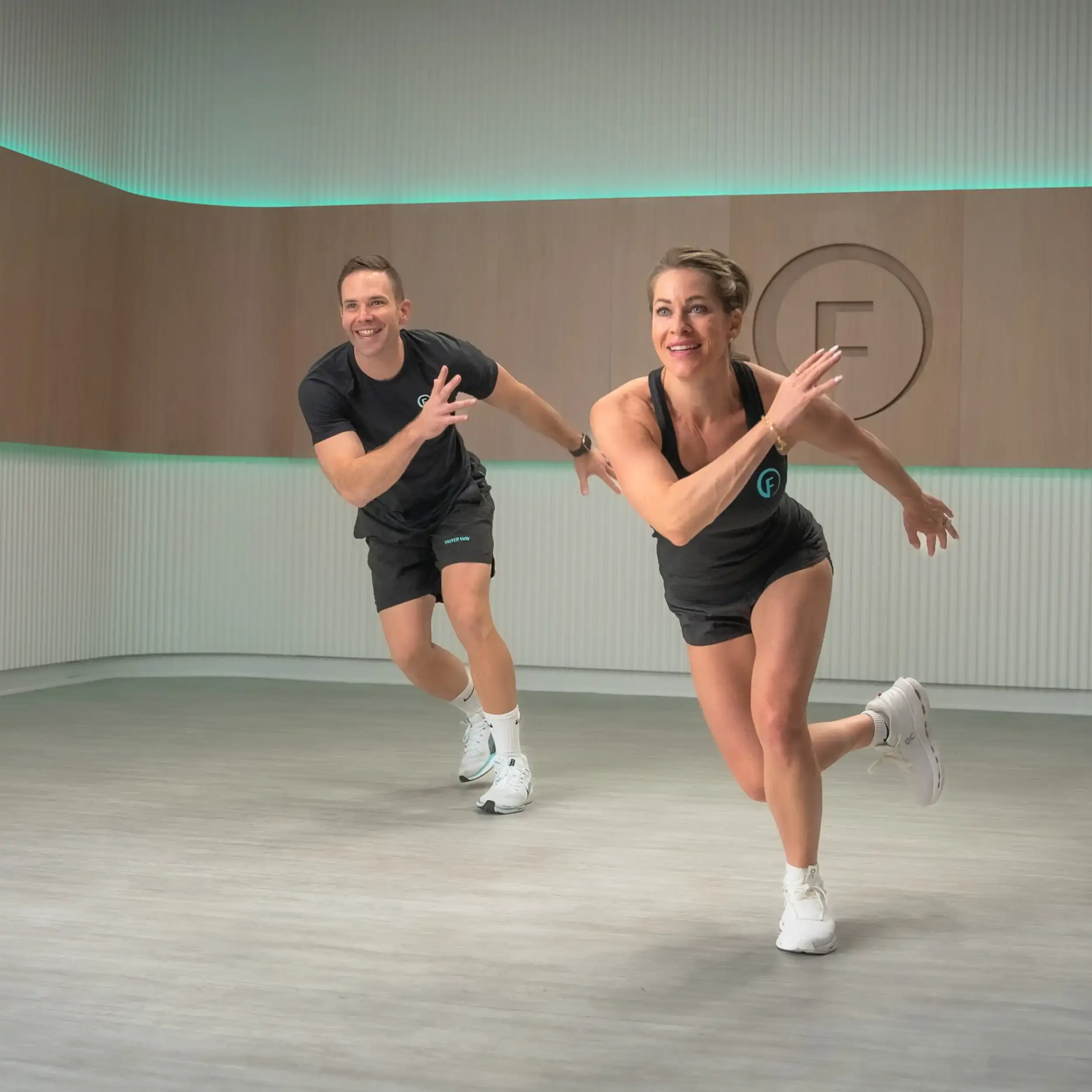
Get a feel for how FASTer Way workouts rebuild muscle, boost energy, and support hormones in a way cardio alone never could.
So What Does Work After 40?
A Smarter Strategy: One That Supports Hormones, Muscle, and Metabolism
This is where the FASTer Way shines—because the entire system was built to support women in midlife. The magic isn’t in doing more. It’s in doing the right things, consistently, with a structure that actually works with your body instead of against it.
1. Strength Training: The Hormone-Friendly, Metabolism-Boosting Game Changer
Strength training isn’t about “getting bulky.” It’s about rebuilding what midlife tries to take from you: your metabolic engine.
When you strength train with progressive overload—adding weight or reps over time—you signal your body to rebuild lean muscle.
And when muscle goes up, your metabolism does too. You:
- Burn more calories at rest
- Stabilize blood sugar more effectively
- Improve insulin sensitivity
- Support hormone balance
- And reshape your body in ways cardio simply cannot
Women over 40 regularly tell us, “My body changed faster in six weeks of lifting than in years of cardio.” That’s the power of muscle.
Related Resource: UCLA Health: The best way to work out after menopause
2. Macronutrients: Fueling Your Metabolism Instead of Fighting It
Most women in midlife are unintentionally under-eating. Not by a little, by a lot. Especially protein.
Under-fueling is one of the fastest ways to stall metabolism and increase cravings. When you learn to hit your protein goal, balance carbs strategically, and fuel in a way that supports training (not punishes your body), your metabolism wakes up again.
Suddenly…
Your energy returns.
Your workouts feel productive.
Your cravings calm down.
Your body composition starts to shift.
It’s not magic. It’s fuel.
3. Intermittent Fasting: A Rhythm That Supports Hormones and Blood Sugar
Women often assume fasting is about “eating less,” but that’s not the FASTer Way approach. Fasting is a rhythm, a gentle overnight window that supports healthy blood sugar, digestion, inflammation, and insulin sensitivity.
When paired with whole-food macros (and enough food overall!), fasting becomes a surprisingly helpful tool in perimenopause and menopause. Women often say they feel clearer, more energized, and more in control of their hunger, not deprived.
Fasting alone won’t replace muscle or fix under-eating. But inside a balanced system? It becomes a powerful support.
The Bottom Line: Cardio Isn’t the Enemy, It’s Just Not the Strategy
Cardio has its place. It supports heart health, improves mood, and boosts longevity. But relying on cardio alone—especially after 40—sets most women up for frustration and plateau.
If you’re working harder than ever but seeing slower results, it’s not a lack of effort. It’s simply that your body needs something different now.
A smarter, hormone-friendly, metabolism-supportive system looks like:
- A progressive overload strength training plan to build and protect muscle
- Macro-balanced nutrition to fuel metabolism
- Intermittent fasting for blood sugar and hormone support
- Walking + occasional HIIT for metabolic flexibility
- Intentional rest and recovery to keep cortisol steady
That’s the FASTer Way approach. And it’s the reason women in their 40s, 50s, and 60s see results they haven’t seen in years, sometimes decades. Because your body isn’t fighting you.
It’s just waiting for you to give it the right tools.
Related Resources:
- High Cortisol Symptoms in Women Over 35 And What Actually Helps
- The FASTer Way Difference: Why We Don’t Fear Carbs (We Use Them to Transform)
- The FASTer Way Difference: Why We Count Macros vs Calories

Ready to See Results That Match Your Effort Again?
The FASTer Way gives women over 40 the exact strategy their bodies need:
- Strength training that rebuilds muscle
- Whole food macro nutrition that fuels metabolism
- Balanced fasting for hormone support
- Simple daily coaching that keeps you consistent
More energy. Better sleep. Less stress. A stronger, leaner body that finally responds again.