.svg)


Muscle definition, strength, nutrition, and recovery after 50
Muscle definition over 50 is an achievable goal. Your strategy simply needs to reflect what your body needs now: consistent strength training, enough protein and energy to support muscle, gradual body-composition changes, and recovery that allows you to keep progressing.
Definition comes from two factors working together. First, you need enough muscle to create visible shape. Second, your overall body-fat level needs to allow some of that shape to show. The balance will look different for every person based on genetics, training history, hormones, health, and where the body naturally stores fat.
A productive plan prioritizes muscle-building strength work while using nutrition, walking, cardio, sleep, and stress management to support gradual fat loss when needed. The process takes patience, but it can deliver much more than visual change. You can become stronger, move with greater confidence, protect your independence, and build a body that supports the life you want to live.
What Actually Creates a Defined Look?
Muscle definition describes the visible shape and separation of muscles under the skin. Three elements influence how defined you look:
The amount of muscle you have
The amount and distribution of body fat
Temporary factors such as hydration, inflammation, digestion, and muscle fullness
You can’t control every factor. Genetics influence where you build muscle most easily and where your body prefers to store fat. Hormonal changes during perimenopause and menopause can also affect fat distribution, sleep, energy, and recovery.
You can control the habits that build muscle and support a healthier body composition over time.
Many women begin by chasing a lower number on the scale. That number cannot tell you how much muscle you have, how strong you are, or how your body shape is changing. Two people at the same weight can look very different based on their proportions of muscle and fat.
For better feedback, track strength, measurements, clothing fit, progress photos, energy, and workout performance alongside body weight.
Strength Is the Starting Point
Muscle is active, useful tissue. It helps you lift, carry, climb stairs, protect your joints, maintain balance, and continue doing everyday activities confidently.
Resistance training gives your muscles a reason to adapt. When you challenge a muscle with an appropriate load, recover, and repeat the process over time, that muscle can become stronger and larger.
The American College of Sports Medicine's 2026 resistance-training guidance recommends training all major muscle groups at least twice per week and building gradually. The guidance also confirms that free weights, machines, resistance bands, bodyweight exercises, and home-based workouts can all be effective.
That flexibility matters. You can work toward muscle definition at home, in a gym, or with a combination of both. The equipment matters less than your ability to create an appropriate challenge and increase it as you become stronger.
The Effort That Changes Muscle
Any activity is valuable, especially when you’re beginning. Muscle definition eventually requires enough tension and effort to create an adaptation.
Choose a resistance that makes the final few repetitions of a set feel challenging while allowing you to maintain good form. You should finish most sets feeling as though you could complete approximately 1 to 3 more controlled repetitions.
Training to complete failure is optional. Extreme methods and advanced techniques are unnecessary for the average healthy adult. Consistent, well-designed training produces results without making every workout exhausting.
A productive muscle-building set may fall anywhere from roughly 6 to 15 repetitions, depending on the exercise, load, and individual. Higher repetitions can also be effective when the resistance is challenging enough.
The key question is simple: Did the target muscle have to work hard?
Build Around the Movements That Matter Most
A balanced program should train the entire body. This creates a defined, capable physique and reduces the temptation to spend every workout focused on one area.
Build your routine around these movement patterns:
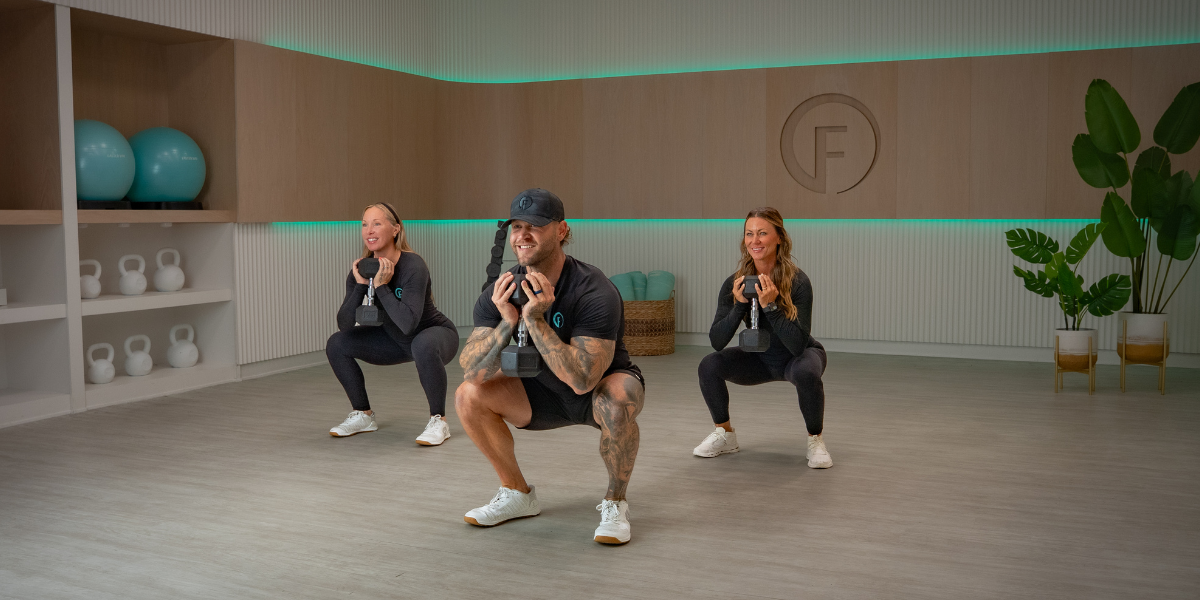
Squat: goblet squat, bodyweight squat, leg press, or sit-to-stand
Hinge: Romanian deadlift, kettlebell deadlift, hip hinge, or cable pull-through
Push: chest press, push-up, overhead press, or band press
Pull: dumbbell row, cable row, lat pulldown, or resistance-band row
Single-leg movement: split squat, reverse lunge, step-up, or supported lunge
Hip extension: glute bridge, hip thrust, or cable kickback
Carry and core stability: farmer carry, suitcase carry, dead bug, bird dog, or plank variation
These patterns train the shoulders, arms, chest, back, glutes, legs, and core while improving the strength you use in everyday life.
Isolation exercises can add targeted volume. Biceps curls, triceps extensions, lateral raises, hamstring curls, and calf raises can help shape specific areas after the main movements are complete.

Subscribe to our blog
Lorem ipsum dolor sit amet, consectetur adipiscing elit. Suspendisse varius enim in eros elementum tristique.
.webp)
Muscle definition, strength, nutrition, and recovery after 50
Muscle definition over 50 is an achievable goal. Your strategy simply needs to reflect what your body needs now: consistent strength training, enough protein and energy to support muscle, gradual body-composition changes, and recovery that allows you to keep progressing.
Definition comes from two factors working together. First, you need enough muscle to create visible shape. Second, your overall body-fat level needs to allow some of that shape to show. The balance will look different for every person based on genetics, training history, hormones, health, and where the body naturally stores fat.
A productive plan prioritizes muscle-building strength work while using nutrition, walking, cardio, sleep, and stress management to support gradual fat loss when needed. The process takes patience, but it can deliver much more than visual change. You can become stronger, move with greater confidence, protect your independence, and build a body that supports the life you want to live.
What Actually Creates a Defined Look?
Muscle definition describes the visible shape and separation of muscles under the skin. Three elements influence how defined you look:
The amount of muscle you have
The amount and distribution of body fat
Temporary factors such as hydration, inflammation, digestion, and muscle fullness
You can’t control every factor. Genetics influence where you build muscle most easily and where your body prefers to store fat. Hormonal changes during perimenopause and menopause can also affect fat distribution, sleep, energy, and recovery.
You can control the habits that build muscle and support a healthier body composition over time.
Many women begin by chasing a lower number on the scale. That number cannot tell you how much muscle you have, how strong you are, or how your body shape is changing. Two people at the same weight can look very different based on their proportions of muscle and fat.
For better feedback, track strength, measurements, clothing fit, progress photos, energy, and workout performance alongside body weight.
Strength Is the Starting Point
Muscle is active, useful tissue. It helps you lift, carry, climb stairs, protect your joints, maintain balance, and continue doing everyday activities confidently.
Resistance training gives your muscles a reason to adapt. When you challenge a muscle with an appropriate load, recover, and repeat the process over time, that muscle can become stronger and larger.
The American College of Sports Medicine's 2026 resistance-training guidance recommends training all major muscle groups at least twice per week and building gradually. The guidance also confirms that free weights, machines, resistance bands, bodyweight exercises, and home-based workouts can all be effective.
That flexibility matters. You can work toward muscle definition at home, in a gym, or with a combination of both. The equipment matters less than your ability to create an appropriate challenge and increase it as you become stronger.
The Effort That Changes Muscle
Any activity is valuable, especially when you’re beginning. Muscle definition eventually requires enough tension and effort to create an adaptation.
Choose a resistance that makes the final few repetitions of a set feel challenging while allowing you to maintain good form. You should finish most sets feeling as though you could complete approximately 1 to 3 more controlled repetitions.
Training to complete failure is optional. Extreme methods and advanced techniques are unnecessary for the average healthy adult. Consistent, well-designed training produces results without making every workout exhausting.
A productive muscle-building set may fall anywhere from roughly 6 to 15 repetitions, depending on the exercise, load, and individual. Higher repetitions can also be effective when the resistance is challenging enough.
The key question is simple: Did the target muscle have to work hard?
Build Around the Movements That Matter Most
A balanced program should train the entire body. This creates a defined, capable physique and reduces the temptation to spend every workout focused on one area.
Build your routine around these movement patterns:
Squat: goblet squat, bodyweight squat, leg press, or sit-to-stand
Hinge: Romanian deadlift, kettlebell deadlift, hip hinge, or cable pull-through
Push: chest press, push-up, overhead press, or band press
Pull: dumbbell row, cable row, lat pulldown, or resistance-band row
Single-leg movement: split squat, reverse lunge, step-up, or supported lunge
Hip extension: glute bridge, hip thrust, or cable kickback
Carry and core stability: farmer carry, suitcase carry, dead bug, bird dog, or plank variation
These patterns train the shoulders, arms, chest, back, glutes, legs, and core while improving the strength you use in everyday life.
Isolation exercises can add targeted volume. Biceps curls, triceps extensions, lateral raises, hamstring curls, and calf raises can help shape specific areas after the main movements are complete.
Subscribe to our blog
Lorem ipsum dolor sit amet, consectetur adipiscing elit. Suspendisse varius enim in eros elementum tristique.
Muscle Definition Over 50: How to Build Shape, Strength, and Confidence
Muscle definition, strength, nutrition, and recovery after 50
Muscle definition over 50 is an achievable goal. Your strategy simply needs to reflect what your body needs now: consistent strength training, enough protein and energy to support muscle, gradual body-composition changes, and recovery that allows you to keep progressing.
Definition comes from two factors working together. First, you need enough muscle to create visible shape. Second, your overall body-fat level needs to allow some of that shape to show. The balance will look different for every person based on genetics, training history, hormones, health, and where the body naturally stores fat.
A productive plan prioritizes muscle-building strength work while using nutrition, walking, cardio, sleep, and stress management to support gradual fat loss when needed. The process takes patience, but it can deliver much more than visual change. You can become stronger, move with greater confidence, protect your independence, and build a body that supports the life you want to live.
What Actually Creates a Defined Look?
Muscle definition describes the visible shape and separation of muscles under the skin. Three elements influence how defined you look:
The amount of muscle you have
The amount and distribution of body fat
Temporary factors such as hydration, inflammation, digestion, and muscle fullness
You can’t control every factor. Genetics influence where you build muscle most easily and where your body prefers to store fat. Hormonal changes during perimenopause and menopause can also affect fat distribution, sleep, energy, and recovery.
You can control the habits that build muscle and support a healthier body composition over time.
Many women begin by chasing a lower number on the scale. That number cannot tell you how much muscle you have, how strong you are, or how your body shape is changing. Two people at the same weight can look very different based on their proportions of muscle and fat.
For better feedback, track strength, measurements, clothing fit, progress photos, energy, and workout performance alongside body weight.
Strength Is the Starting Point
Muscle is active, useful tissue. It helps you lift, carry, climb stairs, protect your joints, maintain balance, and continue doing everyday activities confidently.
Resistance training gives your muscles a reason to adapt. When you challenge a muscle with an appropriate load, recover, and repeat the process over time, that muscle can become stronger and larger.
The American College of Sports Medicine's 2026 resistance-training guidance recommends training all major muscle groups at least twice per week and building gradually. The guidance also confirms that free weights, machines, resistance bands, bodyweight exercises, and home-based workouts can all be effective.
That flexibility matters. You can work toward muscle definition at home, in a gym, or with a combination of both. The equipment matters less than your ability to create an appropriate challenge and increase it as you become stronger.
The Effort That Changes Muscle
Any activity is valuable, especially when you’re beginning. Muscle definition eventually requires enough tension and effort to create an adaptation.
Choose a resistance that makes the final few repetitions of a set feel challenging while allowing you to maintain good form. You should finish most sets feeling as though you could complete approximately 1 to 3 more controlled repetitions.
Training to complete failure is optional. Extreme methods and advanced techniques are unnecessary for the average healthy adult. Consistent, well-designed training produces results without making every workout exhausting.
A productive muscle-building set may fall anywhere from roughly 6 to 15 repetitions, depending on the exercise, load, and individual. Higher repetitions can also be effective when the resistance is challenging enough.
The key question is simple: Did the target muscle have to work hard?
Build Around the Movements That Matter Most
A balanced program should train the entire body. This creates a defined, capable physique and reduces the temptation to spend every workout focused on one area.
Build your routine around these movement patterns:
Squat: goblet squat, bodyweight squat, leg press, or sit-to-stand
Hinge: Romanian deadlift, kettlebell deadlift, hip hinge, or cable pull-through
Push: chest press, push-up, overhead press, or band press
Pull: dumbbell row, cable row, lat pulldown, or resistance-band row
Single-leg movement: split squat, reverse lunge, step-up, or supported lunge
Hip extension: glute bridge, hip thrust, or cable kickback
Carry and core stability: farmer carry, suitcase carry, dead bug, bird dog, or plank variation
These patterns train the shoulders, arms, chest, back, glutes, legs, and core while improving the strength you use in everyday life.
Isolation exercises can add targeted volume. Biceps curls, triceps extensions, lateral raises, hamstring curls, and calf raises can help shape specific areas after the main movements are complete.
.png)
Ready to start your health journey? Join the FASTer Way Program!
A Three-Day Week That Works in Real Life
Three full-body workouts per week provide an effective and manageable structure for many adults over 50. Allow at least one recovery day between strength sessions when possible.
Day 1: Squat, Push, and Pull
Goblet squat: 3 sets of 8-12 repetitions
Dumbbell chest press: 3 sets of 8-12
One-arm dumbbell row: 3 sets of 8-12 per side
Glute bridge: 3 sets of 10-15
Lateral raise: 2 sets of 10-15
Dead bug: 2 sets of 6-10 per side
Day 2: Hinge, Shoulders, and Back
Romanian deadlift: 3 sets of 8-12
Supported split squat: 3 sets of 8-10 per side
Dumbbell shoulder press: 3 sets of 8-12
Lat pulldown or resistance-band pulldown: 3 sets of 8-12
Biceps curl: 2 sets of 10-15
Farmer carry: 3 rounds of 20-40 seconds
Day 3: Legs, Chest, and Glutes
Step-up or leg press: 3 sets of 8-12
Hip thrust: 3 sets of 8-12
Incline push-up or machine chest press: 3 sets of 8-12
Seated cable row or band row: 3 sets of 8-12
Triceps extension: 2 sets of 10-15
Side plank variation: 2 sets per side
Warm up with 5 to 8 minutes of easy movement and lighter versions of your first exercises. Rest long enough between sets to perform the next set with control, generally 60 to 120 seconds.
Begin with fewer sets if you are new to strength training. Add volume as your body adapts.
How Progress Shows Up in the Weight Room
Completing the same workout with the same weights for months will eventually stop providing a strong growth signal. Progressive overload means gradually increasing the challenge.
You can progress by:
Adding a small amount of weight
Completing another repetition with good form
Adding a set
Improving range of motion
Slowing the lowering portion of an exercise
Using a more challenging exercise variation
Improving control and reducing momentum
Progress does not need to happen during every workout.
A simple method is to use a repetition range. Imagine your program calls for 3 sets of 8 to 12 repetitions. Begin with a weight that allows 8 controlled repetitions. Over the following sessions, work toward 12. Once you can complete all 3 sets at the top of the range with solid form, increase the resistance slightly and return to 8 or 9 repetitions.
Record your exercises, weights, and repetitions. A training log makes small improvements visible and removes the guesswork from your next workout.
Protein Gives Your Training Something to Build With
Strength training provides the signal to build muscle. Protein provides the amino acids needed to support repair and growth.
Include a meaningful protein source at each meal. Depending on your needs, a meal might provide approximately 25 to 35 grams of protein, with additional protein coming from snacks.
Protein options include eggs and egg whites, chicken, turkey, fish, seafood, lean beef, tofu, tempeh, edamame, beans, lentils, and a compatible protein powder when convenience is helpful.
Distributing protein throughout the day can be more manageable than trying to catch up at dinner. Protein works best alongside a meaningful training stimulus.
Individual needs vary based on body size, activity, health, and goals. People with kidney disease or other medical conditions should discuss protein targets with their healthcare professional.
Carbohydrates Earn Their Place on Training Days
Carbohydrates support training energy and recovery. They help you bring more effort to your strength sessions, which supports progressive overload and muscle development.
Choose nutrient-dense carbohydrate sources such as potatoes, sweet potatoes, rice, quinoa, fruit, beans, lentils, certified oats, squash, and root vegetables.
Place a useful portion of carbohydrates around your more demanding workouts if that helps you train with greater energy. A hard strength day may call for more than a rest day. Your food intake should support the work your body is being asked to perform.
When Fat Loss Is Part of the Goal
Visible definition may require gradual fat loss, but a severe calorie deficit can interfere with training performance, recovery, energy, and muscle retention.
Continue strength training, keep protein consistent, and adjust portions gradually. Build meals around protein, vegetables or fruit, strategic carbohydrates, and healthy fats.
Persistent fatigue, declining strength, disrupted sleep, intense hunger, and irritability can signal that your approach is too aggressive.
Some people over 50 are better served by a period of maintenance calories while they build strength and improve habits. Beginners and people returning to training may be able to gain muscle and lose fat simultaneously, especially with consistent training and adequate protein.
Visual changes may appear slowly while your strength improves more quickly. Both forms of progress matter.
Walking and Cardio as Supporting Players
Cardiovascular activity supports heart health, endurance, recovery, and energy expenditure. Walking is one of the simplest ways to increase daily movement without creating excessive fatigue.
Use a balanced weekly structure:
Two to three full-body strength workouts
Regular walking or other moderate activity
One or two short, more challenging cardio sessions if appropriate
At least one recovery-focused day
If cardio leaves your legs constantly sore or causes your strength numbers to decline, reduce the duration or intensity. Your conditioning plan should support your larger goal.
The Work Continues Between Workouts
Muscle develops between workouts as your body repairs and adapts. Recovery deserves the same attention as sets and repetitions.
Prioritize consistent sleep, adequate food and hydration, recovery time between hard sessions, easy walking, gentle mobility, stress-management habits, and planned lighter weeks when fatigue accumulates.
Sleep challenges can become more common during midlife. A single imperfect night does not require canceling your workout, but several nights of poor sleep may call for lighter weights, fewer sets, or an additional recovery day.
Learn to distinguish normal training discomfort from pain. Muscle fatigue and mild soreness can be expected. Sharp, worsening, or persistent pain deserves attention and may require professional evaluation.
The Timeline Most People Underestimate
Muscle definition develops over months. Early progress often shows up as better coordination, improved confidence, and increased strength. Visual changes follow as muscle builds and body composition shifts.
Track progress every 4 to 6 weeks using photos in similar lighting, waist and hip measurements, workout performance, clothing fit, energy, everyday strength, balance, and mobility.
Daily mirror checks can be misleading because hydration, digestion, sodium, stress, and lighting change your appearance. Wider review intervals make real trends easier to see.
Where Good Plans Quietly Go Off Track
Program-Hopping
Your body needs repeated exposure to exercises so you can improve them. Follow a consistent program for several weeks before changing the major movements.
Never Increasing the Challenge
Light resistance can work when the set becomes genuinely challenging. If you finish every set feeling that you could perform 10 more repetitions, the muscle may need a stronger stimulus.
Cutting Calories Too Far
A large calorie deficit can reduce energy and workout performance. Use gradual nutrition adjustments and continue prioritizing protein.
Turning Every Day Into a Cardio Day
More cardio can increase fatigue and compete with strength recovery. Choose an amount that supports your heart and body-composition goals while leaving energy for lifting.
Skipping the Part Where Your Body Adapts
Muscle-building work creates a need for sleep, food, hydration, and time. Progress often improves when recovery becomes more consistent.
Letting the Scale Write the Whole Story
The scale cannot show where weight is coming from. Strength, measurements, photos, and clothing fit provide a fuller picture.
Strong First, Definition Follows
Muscle definition over 50 begins with building a body that is strong enough to create visible shape. The appearance develops from consistent strength training, supportive nutrition, gradual body-composition changes, and recovery repeated over time.
Begin with 2 or 3 full-body workouts each week. Train the major muscle groups, record your performance, and increase the challenge gradually. Eat protein throughout the day, use carbohydrates to support training, walk regularly, and protect your recovery.
Your body can continue adapting after 50. Give it a clear training signal, the nutrition it needs, and enough time to respond. The definition you build will be accompanied by something even more valuable: strength you can carry into every part of your life.
We’ve Helped Over Half a Million People Win Their Health Goals!
Ready to start your health journey? Join the FASTer Way Program.