.svg)


You started the GLP-1. You expected the appetite shift and for the scale to move. And yet… here you are, wondering why the "magic" hasn't quite kicked in.
Maybe the scale is barely moving at all. Maybe you saw a quick drop at first, then hit a plateau that won't budge. Or maybe you feel less hungry, but your body composition is giving "not impressed,” leaving you feeling more "skinny-fat" than strong.
First, let’s be clear: if you’re not seeing the results you hoped for, it doesn’t mean you’re doing anything wrong or that the medication isn’t working. Whether you’re taking Semaglutide, Tirzepatide, Wegovy, Ozempic, Zepbound, or Mounjaro, these medications can be incredible tools, but they aren’t a substitute for the foundational habits that help your body actually change for the long haul.
Think of it this way: the medication is the spark, but your nutrition and movement are the fuel. Average weight loss with GLP-1 medications is meaningful, but the response varies a lot from person to person. That’s why clinical guidance continues to treat these as an adjunct to nutrition and physical activity, not a replacement for them. They work best as part of a bigger strategy, not as a solo act. (PMC)
Let’s take a deeper look at what might actually be going on...
1. You May Not Be at a Full Therapeutic Dose Yet
This one gets overlooked all the time.
Many GLP-1 medications are designed to ramp up slowly. For example, Wegovy starts at a low introductory dose and is titrated upward over time. If someone is still early in that ramp-up phase, or had to stay at a lower dose because of side effects, results may be slower than expected. Missing multiple doses can also disrupt progress and may require restarting escalation. (FDA Access Data)
In other words: if you’re comparing your week-4 body to someone else’s month-9 transformation, that’s not exactly a fair fight.
2. Eating Less Is Happening… But Eating Well May Not Be
GLP-1s can reduce appetite. That can be helpful, but it can also create a sneaky problem: you eat much less, yet still don’t eat in a way that supports fat loss, muscle retention, energy, or consistency.
Sometimes intake gets too random. Protein drops, meals get skipped, hydration gets sloppy, and fiber disappears. Then energy tanks, cravings rebound later, workouts suffer, and the body starts feeling less “transformed” and more “running on fumes.”
Often the missing piece is not eating less, but eating enough of the right things: adequate protein, balanced meals, hydration, fiber, and enough fuel to support strength training and recovery. Emerging clinical guidance around GLP-1 care emphasizes that medical nutrition therapy matters, and newer reviews highlight protein intake as a priority during treatment. (PMC)
If you’re consistently under-eating, but not prioritizing protein and nutrient-dense foods, the medication may not produce the kind of body-composition changes you actually want.
3. You’re Losing Weight, but Also Losing Muscle
This is a big one. Weight loss isn’t always the only transformation people actually want. If a large portion of weight lost comes from lean mass, the mirror may not change the way you expected. Strength may drop, metabolism may feel less cooperative, and when muscle slips, maintaining results often gets harder.
This is why body composition matters more than scale weight alone. Losing 10 pounds of muscle and water will look and feel very different than losing 10 pounds while preserving lean mass.
Recent research continues to emphasize preserving muscle during GLP-1 treatment through adequate protein and resistance training. Protein alone is likely not enough without structured strength training. (Obesity Medicine Association)
You want fat loss, yes. But you also want strength, tone, metabolic support, and a body that feels capable.

Subscribe to our blog
Lorem ipsum dolor sit amet, consectetur adipiscing elit. Suspendisse varius enim in eros elementum tristique.
.png)
You started the GLP-1. You expected the appetite shift and for the scale to move. And yet… here you are, wondering why the "magic" hasn't quite kicked in.
Maybe the scale is barely moving at all. Maybe you saw a quick drop at first, then hit a plateau that won't budge. Or maybe you feel less hungry, but your body composition is giving "not impressed,” leaving you feeling more "skinny-fat" than strong.
First, let’s be clear: if you’re not seeing the results you hoped for, it doesn’t mean you’re doing anything wrong or that the medication isn’t working. Whether you’re taking Semaglutide, Tirzepatide, Wegovy, Ozempic, Zepbound, or Mounjaro, these medications can be incredible tools, but they aren’t a substitute for the foundational habits that help your body actually change for the long haul.
Think of it this way: the medication is the spark, but your nutrition and movement are the fuel. Average weight loss with GLP-1 medications is meaningful, but the response varies a lot from person to person. That’s why clinical guidance continues to treat these as an adjunct to nutrition and physical activity, not a replacement for them. They work best as part of a bigger strategy, not as a solo act. (PMC)
Let’s take a deeper look at what might actually be going on...
1. You May Not Be at a Full Therapeutic Dose Yet
This one gets overlooked all the time.
Many GLP-1 medications are designed to ramp up slowly. For example, Wegovy starts at a low introductory dose and is titrated upward over time. If someone is still early in that ramp-up phase, or had to stay at a lower dose because of side effects, results may be slower than expected. Missing multiple doses can also disrupt progress and may require restarting escalation. (FDA Access Data)
In other words: if you’re comparing your week-4 body to someone else’s month-9 transformation, that’s not exactly a fair fight.
2. Eating Less Is Happening… But Eating Well May Not Be
GLP-1s can reduce appetite. That can be helpful, but it can also create a sneaky problem: you eat much less, yet still don’t eat in a way that supports fat loss, muscle retention, energy, or consistency.
Sometimes intake gets too random. Protein drops, meals get skipped, hydration gets sloppy, and fiber disappears. Then energy tanks, cravings rebound later, workouts suffer, and the body starts feeling less “transformed” and more “running on fumes.”
Often the missing piece is not eating less, but eating enough of the right things: adequate protein, balanced meals, hydration, fiber, and enough fuel to support strength training and recovery. Emerging clinical guidance around GLP-1 care emphasizes that medical nutrition therapy matters, and newer reviews highlight protein intake as a priority during treatment. (PMC)
If you’re consistently under-eating, but not prioritizing protein and nutrient-dense foods, the medication may not produce the kind of body-composition changes you actually want.
3. You’re Losing Weight, but Also Losing Muscle
This is a big one. Weight loss isn’t always the only transformation people actually want. If a large portion of weight lost comes from lean mass, the mirror may not change the way you expected. Strength may drop, metabolism may feel less cooperative, and when muscle slips, maintaining results often gets harder.
This is why body composition matters more than scale weight alone. Losing 10 pounds of muscle and water will look and feel very different than losing 10 pounds while preserving lean mass.
Recent research continues to emphasize preserving muscle during GLP-1 treatment through adequate protein and resistance training. Protein alone is likely not enough without structured strength training. (Obesity Medicine Association)
You want fat loss, yes. But you also want strength, tone, metabolic support, and a body that feels capable.
Subscribe to our blog
Lorem ipsum dolor sit amet, consectetur adipiscing elit. Suspendisse varius enim in eros elementum tristique.
Why You Might Not Be Seeing Results on GLP-1s
You started the GLP-1. You expected the appetite shift and for the scale to move. And yet… here you are, wondering why the "magic" hasn't quite kicked in.
Maybe the scale is barely moving at all. Maybe you saw a quick drop at first, then hit a plateau that won't budge. Or maybe you feel less hungry, but your body composition is giving "not impressed,” leaving you feeling more "skinny-fat" than strong.
First, let’s be clear: if you’re not seeing the results you hoped for, it doesn’t mean you’re doing anything wrong or that the medication isn’t working. Whether you’re taking Semaglutide, Tirzepatide, Wegovy, Ozempic, Zepbound, or Mounjaro, these medications can be incredible tools, but they aren’t a substitute for the foundational habits that help your body actually change for the long haul.
Think of it this way: the medication is the spark, but your nutrition and movement are the fuel. Average weight loss with GLP-1 medications is meaningful, but the response varies a lot from person to person. That’s why clinical guidance continues to treat these as an adjunct to nutrition and physical activity, not a replacement for them. They work best as part of a bigger strategy, not as a solo act. (PMC)
Let’s take a deeper look at what might actually be going on...
1. You May Not Be at a Full Therapeutic Dose Yet
This one gets overlooked all the time.
Many GLP-1 medications are designed to ramp up slowly. For example, Wegovy starts at a low introductory dose and is titrated upward over time. If someone is still early in that ramp-up phase, or had to stay at a lower dose because of side effects, results may be slower than expected. Missing multiple doses can also disrupt progress and may require restarting escalation. (FDA Access Data)
In other words: if you’re comparing your week-4 body to someone else’s month-9 transformation, that’s not exactly a fair fight.
2. Eating Less Is Happening… But Eating Well May Not Be
GLP-1s can reduce appetite. That can be helpful, but it can also create a sneaky problem: you eat much less, yet still don’t eat in a way that supports fat loss, muscle retention, energy, or consistency.
Sometimes intake gets too random. Protein drops, meals get skipped, hydration gets sloppy, and fiber disappears. Then energy tanks, cravings rebound later, workouts suffer, and the body starts feeling less “transformed” and more “running on fumes.”
Often the missing piece is not eating less, but eating enough of the right things: adequate protein, balanced meals, hydration, fiber, and enough fuel to support strength training and recovery. Emerging clinical guidance around GLP-1 care emphasizes that medical nutrition therapy matters, and newer reviews highlight protein intake as a priority during treatment. (PMC)
If you’re consistently under-eating, but not prioritizing protein and nutrient-dense foods, the medication may not produce the kind of body-composition changes you actually want.
3. You’re Losing Weight, but Also Losing Muscle
This is a big one. Weight loss isn’t always the only transformation people actually want. If a large portion of weight lost comes from lean mass, the mirror may not change the way you expected. Strength may drop, metabolism may feel less cooperative, and when muscle slips, maintaining results often gets harder.
This is why body composition matters more than scale weight alone. Losing 10 pounds of muscle and water will look and feel very different than losing 10 pounds while preserving lean mass.
Recent research continues to emphasize preserving muscle during GLP-1 treatment through adequate protein and resistance training. Protein alone is likely not enough without structured strength training. (Obesity Medicine Association)
You want fat loss, yes. But you also want strength, tone, metabolic support, and a body that feels capable.
-p-1600.webp)
Download our sample GLP-1 meal guide to see how a macro-based approach can help support fat loss, protect muscle, and make your nutrition feel a whole lot simpler.
4. Your Workouts May Not Be Matched to the Goal
If you’re taking a GLP-1 but not strength training, there’s a good chance you’re leaving results on the table.
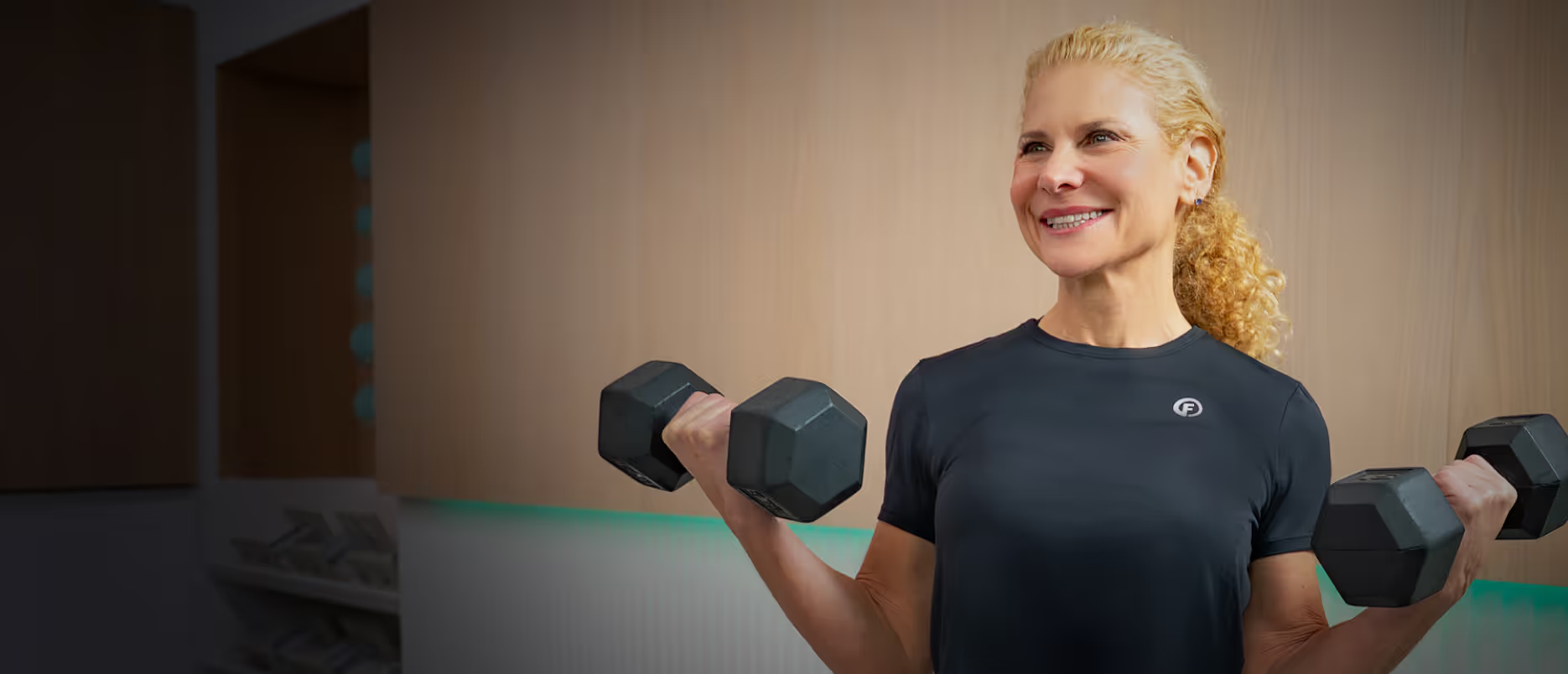
Cardio has value. So does walking, and getting steps in absolutely counts. But if your goal is to look leaner, feel stronger, and hold onto muscle while body weight drops, resistance training has to be part of the conversation.
Clinical reviews of Semaglutide for obesity continue to emphasize that physical activity, including resistance training, is a key part of first-line support alongside medication, not an optional add-on.(PMC)
Strength training helps preserve lean muscle, supports metabolic health, and improves overall body composition, so you’re not just losing weight, but building a stronger, more defined, and more resilient body.
5. Sleep and Stress Are Quietly Throwing Elbows
Few things are more frustrating than “I’m eating less, I’m trying, I’m taking the medication… so why do I still feel stuck?”
Sometimes the answer isn’t in the fridge. It’s in your schedule.
Poor sleep can affect hunger, recovery, workout quality, and day-to-day choices. Chronic stress can make healthy habits harder to maintain and can absolutely change how your body feels during a fat-loss phase.
While GLP-1s can help with appetite regulation, they don’t override a body that’s chronically under-recovered. (PMC)
6. You May Have Hit a Normal Plateau
This part is not fun, but it is normal.
As body weight drops, your body often needs fewer calories. Your larger body required more energy; your smaller body may require less. That means the same habits that worked early on may produce slower changes later.
Plateaus are common with weight-loss interventions, including GLP-1s, and they don’t always mean failure. (Healthline)
If you’re wondering, “Why am I not losing weight on Semaglutide?” or “Why did I stop losing weight on Tirzepatide?” the answer may simply be that your body has adapted and your plan needs to evolve.
Sometimes a plateau means it’s time to review the basics:
- Protein
- Steps
- Strength training
- Sleep
- Hydration
- Consistency
- Dose timing
- Whether you’re actually fueling enough to preserve muscle and train well
Not glamorous. Very effective.
7. Side Effects May Be Making Consistency Harder Than You Realize
Nausea, reflux, constipation, fullness, food aversions, and low appetite can all make it harder to eat balanced meals consistently.
That can lead to under-fueling, low protein intake, dehydration, and a “snacky but not nourished” pattern.
When that happens, people often assume they’re doing great because intake is lower. But lower intake without better nourishment can backfire.
Current multidisciplinary reviews on Semaglutide emphasize that nutrition support can improve adherence and help manage side effects during treatment—not just improve comfort, but also support better long-term results.(PMC)
Support around protein, hydration, fiber, meal timing, and symptom management can make a significant difference in how you feel and how consistently you’re able to follow through.
8. The Medication May Not Be the Right Fit for Your Body
This is the part no one loves, but it matters. Not everyone responds the same way to the same medication. Some people lose a significant amount while others lose modestly and some barely at all.
Biology, health history, medication adherence, coexisting conditions, and even genetics may influence response.(Healthline)
That doesn’t mean the journey is over. It means the plan may need adjusting with your healthcare provider .
What to Do Next if You’re on a GLP-1 and Not Seeing Results
Before you decide the medication “failed,” ask yourself these questions:
- Are you at your intended maintenance dose?
- Are you missing doses or stretching them?
- Are you eating enough protein?
- Are you strength training at least a few times per week?
- Are you walking and moving consistently?
- Are sleep and stress making everything harder?
- Are side effects reducing your food quality?
- Are you tracking only the scale and ignoring body composition, energy, measurements, and strength?
That last one matters a lot.
A changing body does not always announce itself dramatically through the scale first.
The Bottom Line
GLP-1s can be a powerful tool, but a tool isn’t the whole toolbox. If you’re not seeing results, it’s not necessarily that it’s not working. The issue is often that the medication is being asked to carry the entire load without enough support from protein, resistance training, recovery, hydration, consistency, and individualized guidance.
The goal isn’t to eat as little as possible and hope for the best. The goal is to create a body that’s leaner, stronger, more energized, and better supported for the long haul.
That’s where strategy comes in. And honestly? Strategy is a lot more reliable than wishful thinking.
FAQ
Why am I not losing weight on a GLP-1?
Common reasons include not yet reaching a therapeutic maintenance dose, inconsistent use, low protein intake, lack of strength training, side effects that disrupt nutrition, poor sleep, high stress, or normal plateauing over time. (FDA Access Data)
Can you plateau on Semaglutide or Tirzepatide?
Yes. Plateaus can happen as your body weight drops and energy needs change. A plateau does not necessarily mean the medication stopped working; it may mean your overall plan needs to be adjusted. (Healthline)
Do I need to work out if I’m on a GLP-1?
For the best body-composition outcome, yes. Resistance training is especially important to help preserve muscle mass while losing weight. (PMC)
How much protein should I eat on a GLP-1?
Protein needs vary by person, age, activity level, and medical history. But current expert guidance clearly prioritizes adequate protein intake during GLP-1 therapy, especially when appetite is reduced. Your healthcare provider can help personalize the right target for you.
(Obesity Medicine Association)
Could low calories actually slow progress on a GLP-1?
Very low intake can make it harder to hit protein needs, train effectively, recover well, and preserve lean mass. That can hurt body composition even if scale weight changes. (PMC)
What should I do if my GLP-1 isn’t working?
Talk with your healthcare provider. Review your dose progression, side effects, consistency , nutrition quality, activity, sleep, and whether another medication or treatment approach may be more appropriate. (FDA Access Data)
Ready for a smarter fat-loss strategy alongside GLP-1 support?
Build your plan around protein, strength training, sustainable nutrition, and coaching that helps you protect muscle and create real body-composition change.